
Looking for more?
There are four important questions to answer about my fresh milled flour journey, and I thought they each deserved their own feature- “Who am I?”, “Why am I doing this?“, “What does home milling look like?“, “What do I need to start my own home milling journey?”
(Click the links to see each individual answer!)
There are two categories for the “Why” of fresh milled flour- the science and the personal reasons.
Let’s start with the personal- I have always struggled with my weight, and with a diagnosis of PCOS, my hormones have been out of order since puberty. It took us 6 years and a fertility doctor to have our first girl, and then the second came as an absolute surprise and miracle. I am on a mission to help my girls avoid the weight struggles, tying their well being to their weight, and encouraging their hormones to be as regulated as possible.
Part of getting pregnant was to start the keto diet, but bread is my love language and so it was so difficult to stick to such a strict diet. I also hated the idea of eating a strict diet in front of a child, how do I explain that I won’t touch any carbs, even though I genuinely believe a certain amount of healthy carbohydrates are good for a body? So I started researching- why are ‘whole grains’ recommended, but when you buy ‘whole wheat flour’ it didn’t seem to come with more nutrition or fewer glucose/insulin spikes?
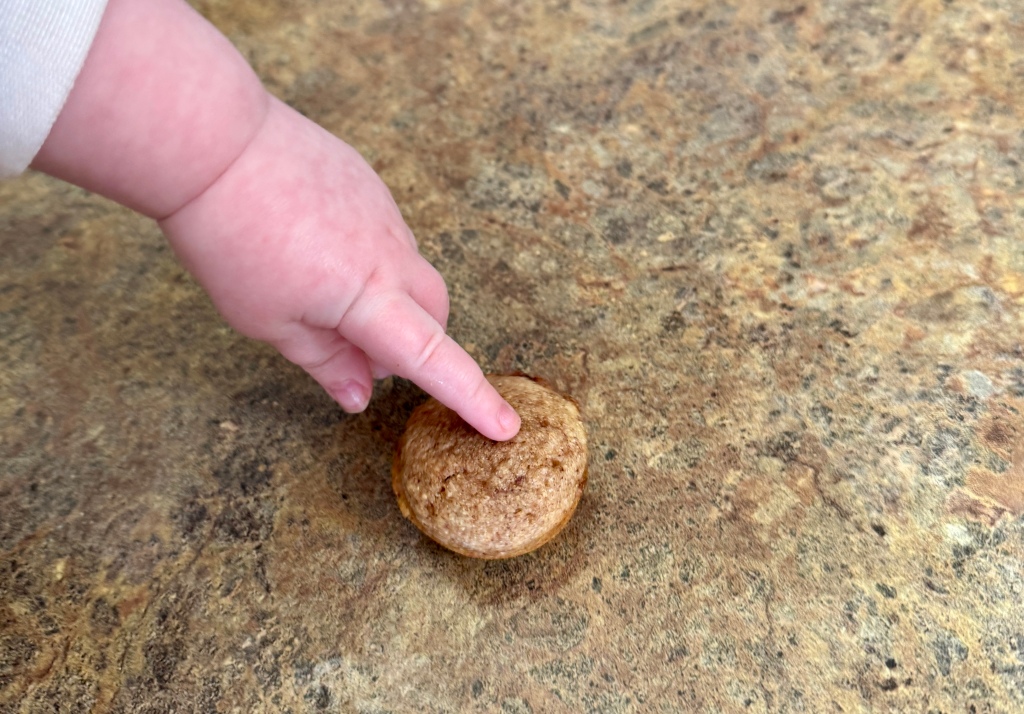
Eventually I settled on trying to make most of our snacks at home so that I could control how much sugar went in to the things my girls were eating frequently (mini muffins and granola bars in particular!) I started making sourdough bread for sandwiches because sourdough was supposed to have a lower glycemic index… the problem? My husband and kids *hated* the sourdough! Eventually I decided to just make regular bread for them, but it felt so counterproductive to spend time in the kitchen making them white bread that wasn’t as good as store bought, spoiled faster, and wasn’t really healthier in any way.
Then, Facebook, of all things, started recommending a group of “fresh milled” baking. At first I scoffed, “those are just crazy preppers!” Then I started seeing them quote scientific facts about fresh milled flour vs commercial flour. I was certain they were skewed studies or just arbitrary information thrown into graphics without any real scientific data. So I went researching just to prove them wrong… Only to discover they were right!
So here’s the science behind “why” fresh milled flour is worth adding to your life:
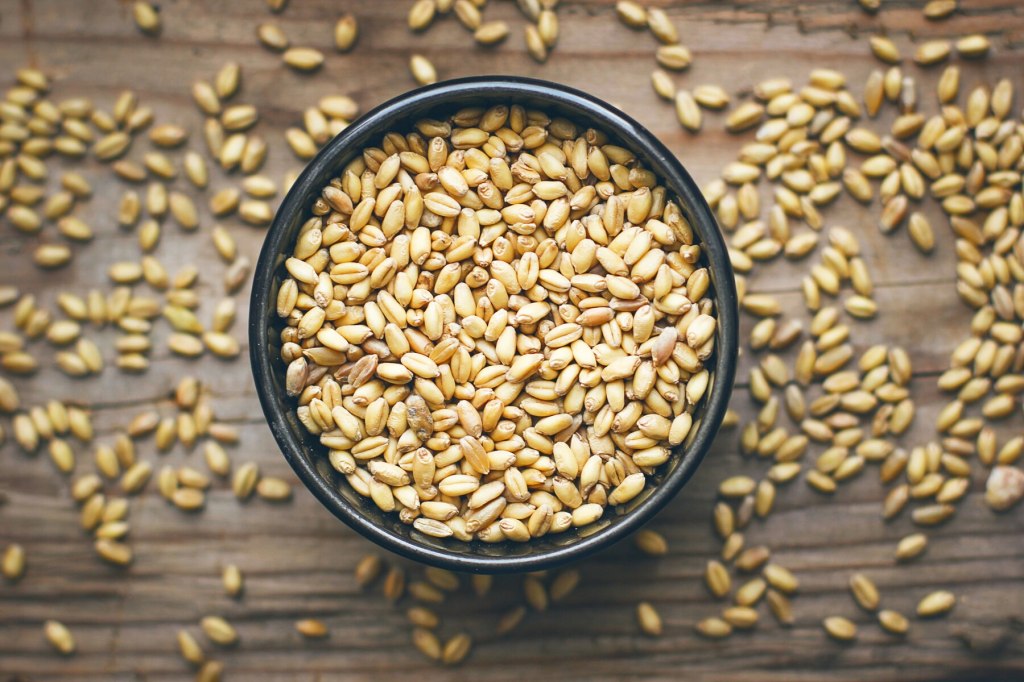
First, are you familiar with the history of flour? No? Neither was I! So, quick recap (you can get all the details here if you want more information!) Prior to 1900, almost all homes were baking with flour they were getting from the local mill. Houses were frequently built within a certain distance of the local mill because fresh milled flour does not have a long shelf life. In the late 1890s/early 1900s, a new milling process was created that removed the germ and bran (which contain the vitamins, oils, and fiber!) from the endosperm (which is mostly the starchy carbs). The endosperm, once ground, was incredibly shelf stable, and also super fine flour. Now what was considered a luxury quality of flour was available to everyone! The milling companies then took the nutritional bran and germ and were selling it to feed lots to help fatten up the livestock.
Then suddenly entire populations of healthy people were developing diseases linked to nutritional deficiencies. Across the world governments were stepping in to prevent diseases from nutritionally deficit flour. The UK mandated that a certain amount of the germ and bran had to be added back in, but the US only required that certain vitamins be added to the flour (and so ‘enriched flour’ was born)- but it isn’t the natural types of the vitamins, they added back in the cheaper to acquire synthetic forms of thiamin, niacin, and iron (in 1998 they also added folic acid, the synthetic form of folate).
Adding these back in showed a suddenly disappearance of the diseases pellagra and beriberi, brilliant marketing claimed the enrichment of the bread (Wonderbread!) swooped in to save us from these diseases, without anyone seeming to realize if we did less removal from the original wheat berry, we wouldn’t have to add all these synthetic vitamins back in! A study done of the whole wheat berry found that it contains 40 of the 44 essential vitamins, and when freshly ground and all parts are used for baking there is negligible loss of these nutrients.
History also shows us that in less than 100 years, flour millers went from milling 90% for home bakers and 10% for commercial baking to over 90% of the flour milled goes directly to commercial baking. We have stopped baking at home because we are too busy- we are taught that ‘sliced bread’ is the best thing, convenience foods are truly convenient, and that the laws in place are preventing commercial baking from harming us. (Yes, I suddenly went from rational to don’t trust the government- hang in there, I promise it’s the only time I’ll mention it!)
There were some interesting studies done comparing commercial flour to fresh milled flour with rats- Rats were fed 50% rat food and 50% of one of the following: 1) Fresh stone ground flour 2) Bread made with stone ground flour 3) stone ground flour after a 15 day storage 4) bread made with 15 day old flour 5) commercially made white flour.
After four generations, only the rats from group 1 and 2 were still fertile.
As someone who struggled with fertility and want to prevent my girls from the same, this one really made me sit back in my chair and think. Puzzle pieces started falling into place in my head. Four generations of rats would be the same number of generations of humans in about 100 years, depending on the age women have kids. That puts us pretty darn close to 1900 when commercial flour became the gold standard at home. And I know I am not the only one of the millennial generation to really struggle with fertility. Did keto work for me because I was giving up this commercial hyper-processed junk?
I can’t say for sure, but it was certainly motivating enough to commit the couple of hours every week (usually Sunday or Monday) to baking a loaf of bread, a double batch of mini muffins, etc for my girls to have through the week.
Let’s take a quick look at the wheat vs commercial flour nutrition breakdown (Remember, freshly milled flour is pretty much identical to the whole wheat berry!):

USDA Wheat Nutrient Statistics (per pound)
The average bushel of wheat weighs about 60 pounds. The standard extraction rate yields about 72 percent white flour and 28 percent mill feed. Thus, approximately 2.3 bushels of wheat are required to produce 100 pounds of white flour.
| Nutrient | Hard Red Wheat | Whole-Wheat Flour (packaged) | White Flour (unenriched) | Enriched* White Flour |
| Calories | 1,497 | 1,656 | 1,651 | 1,651 |
| Protein (g) | 55.8 | 54.4 | 47.6 | 47.6 |
| Fat (g) | 8.2 | 5.9 | 4.5 | 4.5 |
| Carbohydrates (g) | 325.2 | 336.1 | 345.2 | 345.2 |
| Calcium (mg) | 209 | 109 | 73 | 73 |
| Phosphorus (mg) | 1,606 | 866 | 395 | 395 |
| Iron (mg) | 15.4 | 5.9 | 3.6 | 13* |
| Potassium (mg) | 1,678 | 431 | 431 | 431 |
| Thiamine (mg) | 2.35 | 1.16 | .28 | 2* |
| Riboflavin (mg) | .53 | .33 | .21 | 1.2* |
| Niacin (mg) | 19.5 | 9.3 | 4.1 | 16* |
| *based upon the minimum required levels of enrichment | ||||
Ready to fall down the science research rabbit hole, too? Here’s all my links, my favorite is the first which has appropriate sources sited:
- https://eap.mcgill.ca/publications/EAP35.htm
- https://foodstruct.com/food/wheat
- https://www.breadbeckers.com/blog/going-with-the-grains-wheat-and-corn/
- https://www.researchgate.net/publication/259566290_Effect_of_different_milling_methods_on_glycaemic_response_of_foods_made_with_finger_millet_Eucenea_coracana_flour
- https://www.researchgate.net/publication/242559507_Stability_of_Vitamin_E_in_Wheat_Flour_and_Whole_Wheat_Flour_During_Storage
- https://www.researchgate.net/publication/384565679_New_Technology_of_Bakery_Products_of_Whole-Ground_Spelt_Flour
- https://www.researchgate.net/publication/379847825_TECHNOLOGY_FOR_PRODUCTION_AND_QUALITY_OF_BREAD_BAKED_FROM_WHOLE_GRIND_WHEAT_FLOUR
- https://www.unsifted.com/pages/learn
- https://www.researchgate.net/publication/238345428_A_study_of_gluten_extractability_from_doughs_made_from_fresh_and_stored_wheat_flours
- https://www.researchgate.net/publication/376267588_Development_of_sourdough_bread_from_roll-milled_and_stone-ground_soft_Triticum_aestivum_wheat_flours_milled_to_different_extraction_rates
- https://www.researchgate.net/publication/380725168_From_wheat_grain_to_flour_a_review_of_potential_sources_of_enteric_pathogen_contamination_in_wheat_milled_products
- https://www.youtube.com/watch?v=A9XNQii8k-4




 Milling it Over
Leave a comment